

While racking up our steps at MWC in Barcelona this month, we launched our 2026 Mobile Consumer Survey report. The timing couldn’t have been more fitting. Across the halls of MWC, and in particular at the MVNO Summit on Day 3, conversations kept returning to the same themes: eSIM adoption, digital-first connectivity, new business models for MVNOs, and the growing role of brands outside of traditional telecom.
Our latest research shows those industry discussions are already playing out in American consumer behavior. U.S. mobile customers are evaluating their providers more often, switching friction is falling as technologies like eSIM mature, and younger generations are redefining what loyalty means in telecom. At the same time, openness to new types of providers, particularly retailers and digital brands, continues to grow, expanding the competitive landscape beyond traditional carriers.
The shift many executives were discussing on stage and in the halls at MWC is already visible in the market. The era of set-and-forget telecom is ending, and a more dynamic, consumer-driven mobile ecosystem is emerging. Our survey explores what’s driving that change and what it means for the future of mobile.
What our survey data shows
The current U.S. mobile market is defined by continuous plan evaluation, elevated price sensitivity, and normalized switching behavior. To better understand how consumers choose providers, what drives churn, and how technologies like eSIM are reshaping behavior, OXIO surveyed over 1,000 U.S. adults with a current mobile plan. Below are the answers to the most common questions, based on the OXIO 2026 U.S. Mobile Consumer Survey.
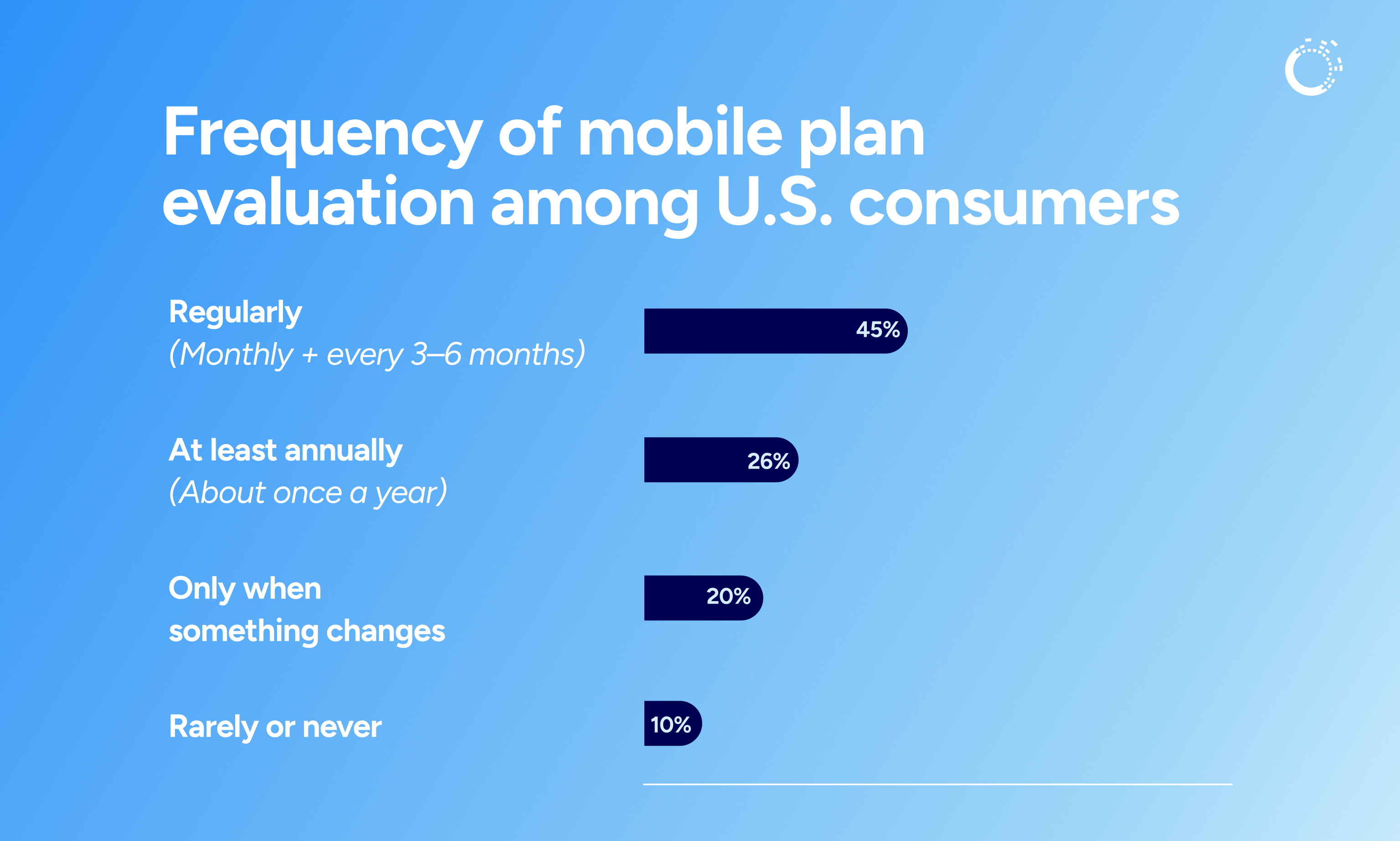
How often do U.S. consumers reevaluate their mobile plan?
U.S. consumers regularly reassess whether they’re getting a good deal on their mobile plan. Seven in ten consumers (70%) reevaluate their plan at least once a year, and nearly one in five (18%) do so monthly. Plan evaluation is now becoming routine rather than reactive. The behavior is even more pronounced among Gen Z, with 83% reevaluating at least once a year and 37% doing so every three to six months.
What triggers people to switch or reconsider their mobile provider?
The most common trigger for reevaluating a mobile plan is a bill increase, cited by 58% of consumers. Other factors, such as network performance issues, promotions from other providers, or device upgrades, are secondary. This shows that price sensitivity remains structural across generations, not situational.
What do consumers value most when choosing a mobile plan?
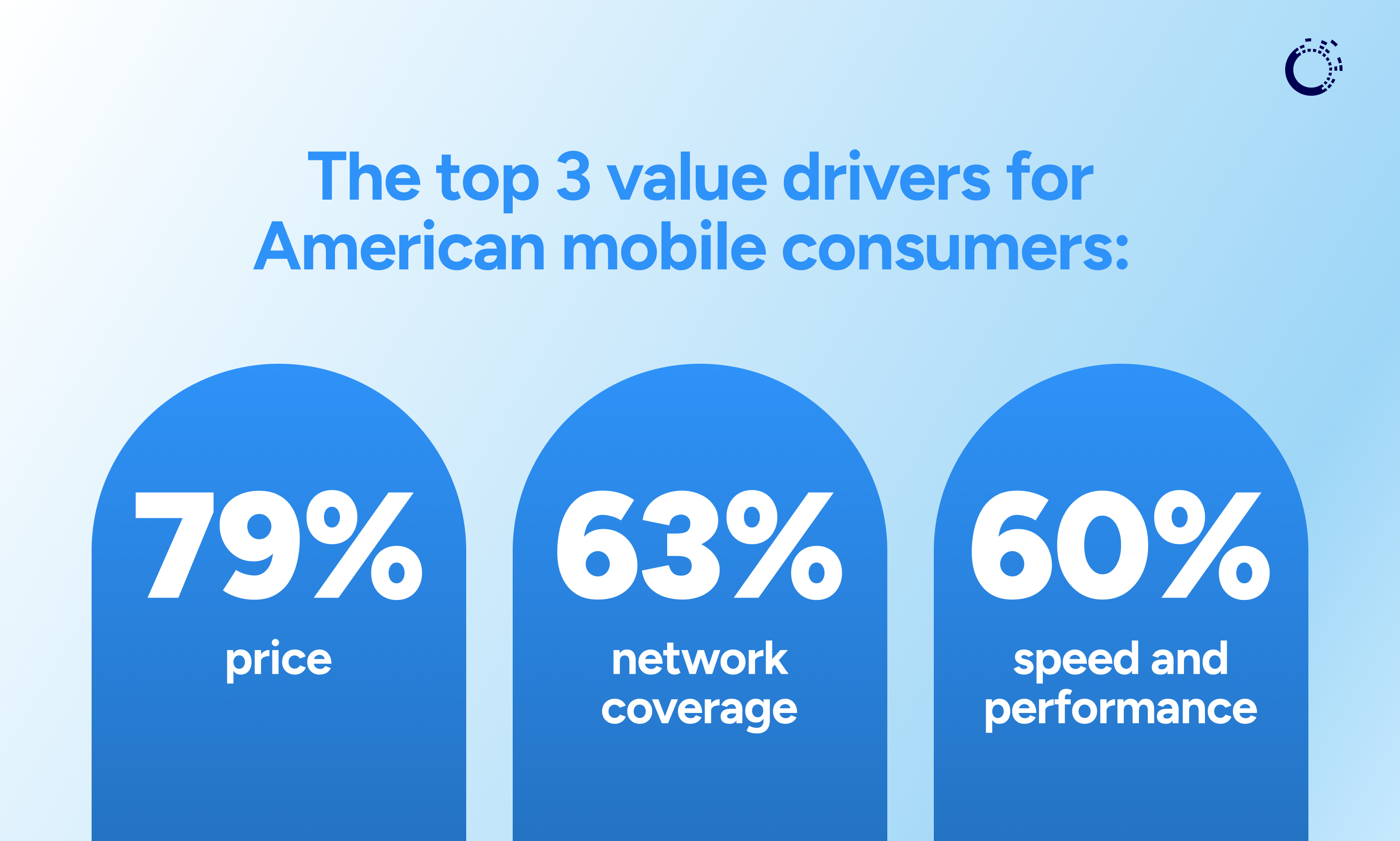
Across all generations, affordable pricing is the top priority when selecting a mobile provider. 79% of consumers cite pricing as their most important factor, followed by network coverage (63%) and speed and performance (60%). These three factors have ranked highest for the second consecutive year, reinforcing that mobile remains a value-driven category and the foundations of telecom remain intact.
What about streaming and content bundles?
Despite years of carrier investment in entertainment and content partnerships, bundled services rank near the bottom of value drivers at just 22%. Even among Gen Z, one of the most subscribed generations, interest drops to just 20%. This suggests that while consumers may still value content, they prioritize core fundamentals like price, reliability, and transparency over undifferentiated add-ons.
How common is switching mobile providers today?
Switching mobile providers is now a mainstream behavior. Six in ten U.S. consumers (60%) say they have switched their primary mobile provider before, indicating that loyalty in the mobile category is conditional rather than permanent. Switching is no longer perceived as risky or disruptive, but as a normal part of managing household expenses.
How many consumers have used eSIM—and do people find it easy to use?
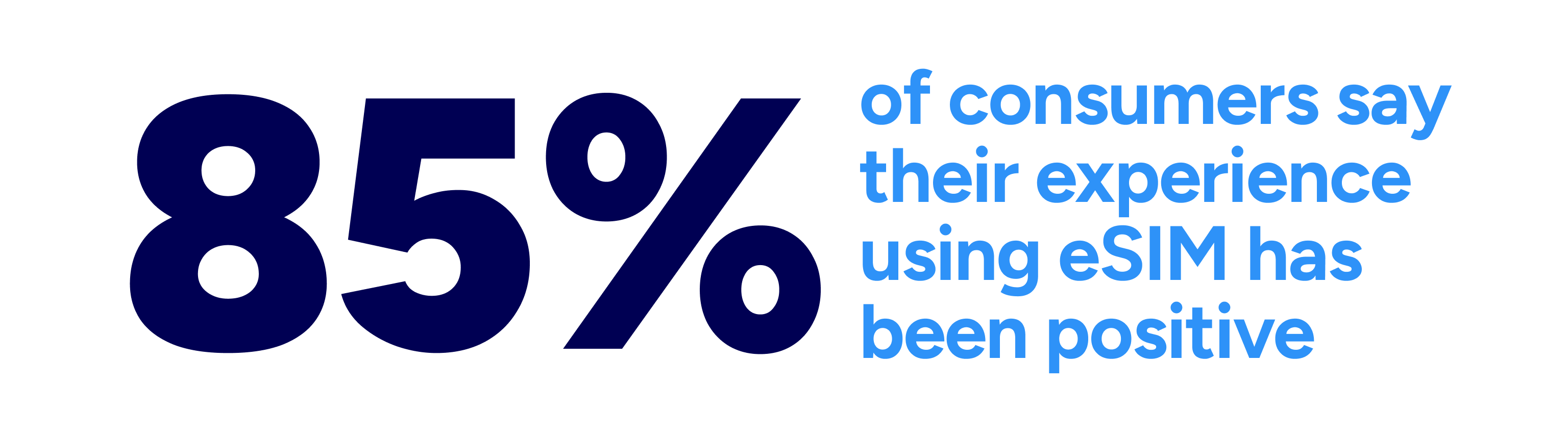
44% of U.S. consumers report having used an eSIM, showing that adoption is well beyond early experimentation. Among those who have used eSIM, the experience is largely positive: 52% describe it as “very easy,” and an additional 33% say it was “somewhat easy.” Negative experiences are rare, suggesting usability is not a major barrier.
Does eSIM make consumers more likely to switch providers?
Yes. Nearly half of U.S. consumers say they would be more likely to switch mobile providers if eSIM enabled instant activation. This effect is strongest among Millennials and Gen Z. As eSIM adoption increases, the barrier to switching continues to shrink, accelerating provider comparison and making loyalty more performance-driven.
Global industry data reinforces this shift. GSMA Intelligence notes that eSIM is helping fuel the growth of digital-first MVNOs and non-telco connectivity providers. While travel eSIM usage from operators continues to grow at around 10–15% annually, usage from non-telco providers is growing closer to 50% per year, highlighting how eSIM is expanding the competitive landscape beyond traditional carriers.
What keeps consumers on family plans – and what finally makes them leave?
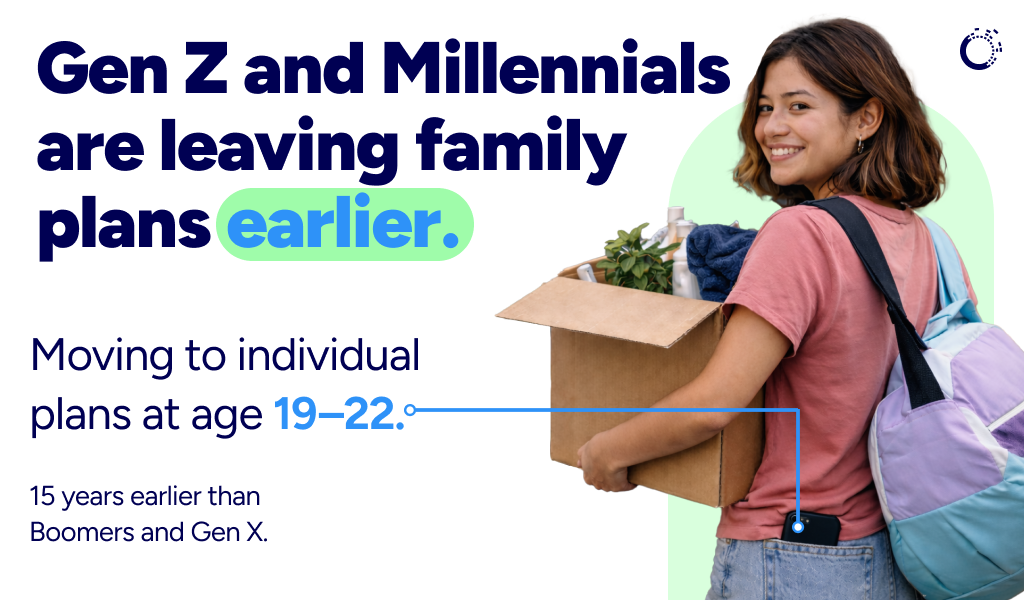
Family plans remain relevant for practical reasons rather than emotional loyalty. Consumers stay on family plans primarily for convenience (56%), lower cost compared to individual plans (52%), and network coverage that meets their needs (51%). However, loyalty is conditional: finding a better deal is the number one reason consumers say they would leave a family plan (50%), particularly among younger generations. Among Millennials and Gen Z, the shift to individual plans typically happens between ages 19 and 22 – nearly 15 years earlier than older generations.
Do consumers prefer new or refurbished mobile devices?
Most U.S. consumers continue to prefer brand-new devices. Fifty-five per cent say they prefer new phones, although many only upgrade when necessary. Interest in used or refurbished devices remains limited, with just 17% of consumers saying they are open to refurbished options. This suggests that while price sensitivity is high in mobile service, consumers remain cautious when it comes to device quality and longevity.
How do consumers prefer to interact with their mobile providers today?
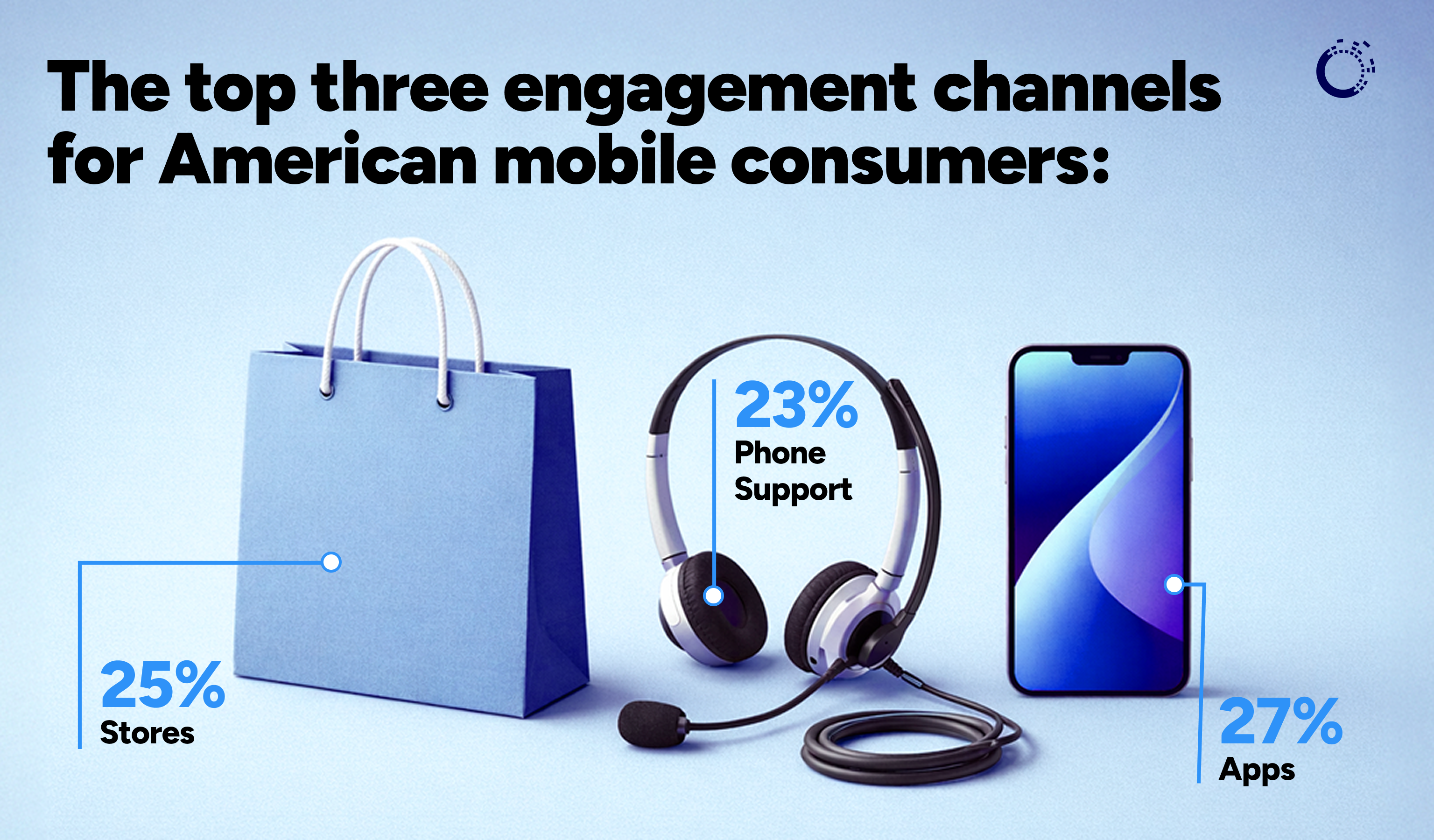
Consumers expect flexibility across channels rather than relying on a single point of contact. Mobile apps (27%), physical stores (26%), and phone support (23%) are all widely used, with no single channel dominating. Additionally, 81% of consumers say access to a physical store is important or somewhat important when choosing a mobile provider, underscoring the continued role of human support and in-person reassurance, particularly during moments of friction such as onboarding, billing issues, or switching.
Are consumers open to mobile services from retailers and other non-traditional providers?
Consumers are increasingly open to non-traditional mobile providers. Three-quarters of U.S. consumers have a neutral (38%) or positive (37%) opinion of companies such as retailers, digital brands, or banks offering mobile services. For the second year running, retailers stand out as the most trusted alternative, with 56% of consumers saying they would consider buying their mobile service from a retailer, up from 50% in 2025.
Is skepticism toward non-traditional mobile providers declining?
Yes. Consumer skepticism toward non-traditional mobile providers is decreasing. The share of consumers who say they aren’t interested in buying mobile services from any non-traditional provider (“none of the above”) fell from 31% in 2025 to 19% in 2026. This shift indicates growing confidence in alternative models, especially those offered by retailers and digital-only brands, as consumers grow more comfortable evaluating mobile offerings beyond traditional carrier brands.
How is the U.S. mobile market changing in 2026?
In 2026, the U.S. mobile market is defined by continuous evaluation, normalized switching, and expanding competitive choice. Consumers are treating mobile plans as flexible services rather than long-term commitments, regularly reassessing value and switching when pricing or transparency falls short. Technologies like eSIM are reducing friction, while trusted non-traditional brands are gaining credibility. At the same time, traditional anchors such as family plans and device financing still play an important—though increasingly conditional—role.
What do these trends mean for mobile providers going forward?
Retention can no longer rely on inertia. In a market where 70% of consumers reassess annually and 60% have switched before, loyalty must be actively earned. As switching becomes easier, providers will need to compete consistently on price, transparency, and experience. Instant activation, predictable billing, and credible brand relationships are becoming critical differentiators.
Providers that combine competitive pricing with low-friction onboarding and seamless digital and physical support will be best positioned to win in a market defined by constant evaluation. With 41% of consumers citing trust as a key value driver and billing transparency ranking close behind price, those who make clarity visible will hold a structural advantage. This becomes even more apparent with younger generations who value transparency more than most.
The mobile market is no longer static. It’s actively evaluated, continuously compared, and increasingly open to new models.
The data: OXIO’s 2026 Mobile Consumer Survey
If you just want the facts, here are the top findings from OXIO’s 2026 Mobile Consumer Survey:
- 70% of U.S. consumers reevaluate their mobile plan at least once a year, and a bill increase is the top trigger for reevaluation (58%).
- 60% of U.S. consumers say they have switched mobile providers before.
- Consumer sentiment toward non-traditional mobile providers is broadly open, with 37% holding a positive view and 38% neutral. Consumers are most excited by better rates (35%) and choosing a mobile plan from a brand they already trust (30%).
- eSIM adoption is approaching the mainstream: 44% of U.S. consumers have used eSIM, and among those users, 52% describe their experience as very easy.
- Nearly half of consumers would be more likely to switch providers if eSIM enabled instant activation, signaling reduced switching friction.
- Pricing remains the top priority when choosing a mobile provider (79%), followed by network coverage (63%) and speed/performance (60%)—the same top three drivers for the second year in a row.
- Retailers are the most trusted non-traditional mobile providers, with 56% of consumers saying they would consider buying their mobile service from a retailer.
- Skepticism toward non-traditional mobile providers is declining: the share of consumers selecting “none of the above” when presented with types of alternative mobile providers dropped from 31% in 2025 to 19% in 2026.
- U.S. consumers are nearly evenly split between individual (48%) and family (51%) mobile plans, reflecting multiple viable ownership models.
- Mobile independence is happening earlier: among consumers on individual plans, 58% have never been on a family plan, and 17% left family plans between the ages of 19 and 22.
- The primary reasons consumers leave family plans are the desire to have their own individual plan (50%), greater control (38%), and life-stage changes such as marriage or having children (29%).
- Family plans retain customers through practicality, not emotion: convenience (56%), lower cost versus individual plans (52%), and sufficient network coverage (51%) are the main reasons consumers stay.
- Finding a better deal is the number one reason consumers would leave their family plan (50%).
- Devices remain a major anchor in the mobile relationship: 38% of consumers buy their device and mobile service together, and 22% do so to access financing or bundled offers.
- Consumers expect an omnichannel relationship with their mobile provider: mobile apps (27%), physical stores (26%), and calling customer support (23%) are all widely used, with no single engagement channel dominating.
- Most consumers prefer brand-new devices (55%), but tend to upgrade only when necessary.
- The top barriers to switching mobile providers are network performance concerns (47%), hidden fees (45%), and worries about transferring data (37%).
Source & Attribution
OXIO 2026 U.S. Mobile Consumer Survey (n=1,040 U.S. consumers 18+ with mobile plans), conducted January, 2026.
Download the OXIO 2026 Mobile Consumer Survey Report here.


